Knockdown Rebuild8 min read
Knockdown Rebuild Cost in Canberra (2026)
What a knockdown rebuild costs in Canberra in 2026: demolition, asbestos, services, approvals and build costs, with worked examples and FAQs.
In this article
- The short answer
- Where the money goes
- 1. Demolition
- 2. Asbestos audit and removal
- 3. Disconnecting and reconnecting services
- 4. Design and approvals
- 5. Building the new home
- The costs people forget
- Three example scenarios
- Scenario 1: 1960s brick veneer on a flat block
- Scenario 2: fibro cottage on a sloping block
- Scenario 3: keeping a big tree and the pool
- Examples from our projects
- What affects the cost most
- How to avoid nasty surprises
- Book a free site consult
- Frequently asked questions
Figures checked in October 2026. Building prices move, so check the date before you lean on these numbers.
You love the street, the school is around the corner and the block is a good one. The house is the problem. A knockdown rebuild lets you keep the address and start again, but the price of the new house is only part of the story. Demolition, asbestos, services and approvals all happen before the first slab is poured, and they're the costs people most often leave out of their sums.
This guide breaks down the full knock down rebuild cost in Canberra stage by stage, with worked examples and the questions worth asking before you sign anything.
The short answer
For a typical family home, a Canberra knockdown rebuild usually costs between $750,000 and $1.8 million all up in 2026. Demolition, asbestos removal, services and approvals typically add $50,000 to $130,000. The rest is the new home, which costs about $3,200 to $5,500 per square metre to build.
The biggest factor by far is the size and finish of the new home. The old house, the slope of the block and what's buried in the walls decide the rest.
Where the money goes
It helps to think about a knockdown rebuild in five parts. Here's what each one involves and what it typically costs.
1. Demolition
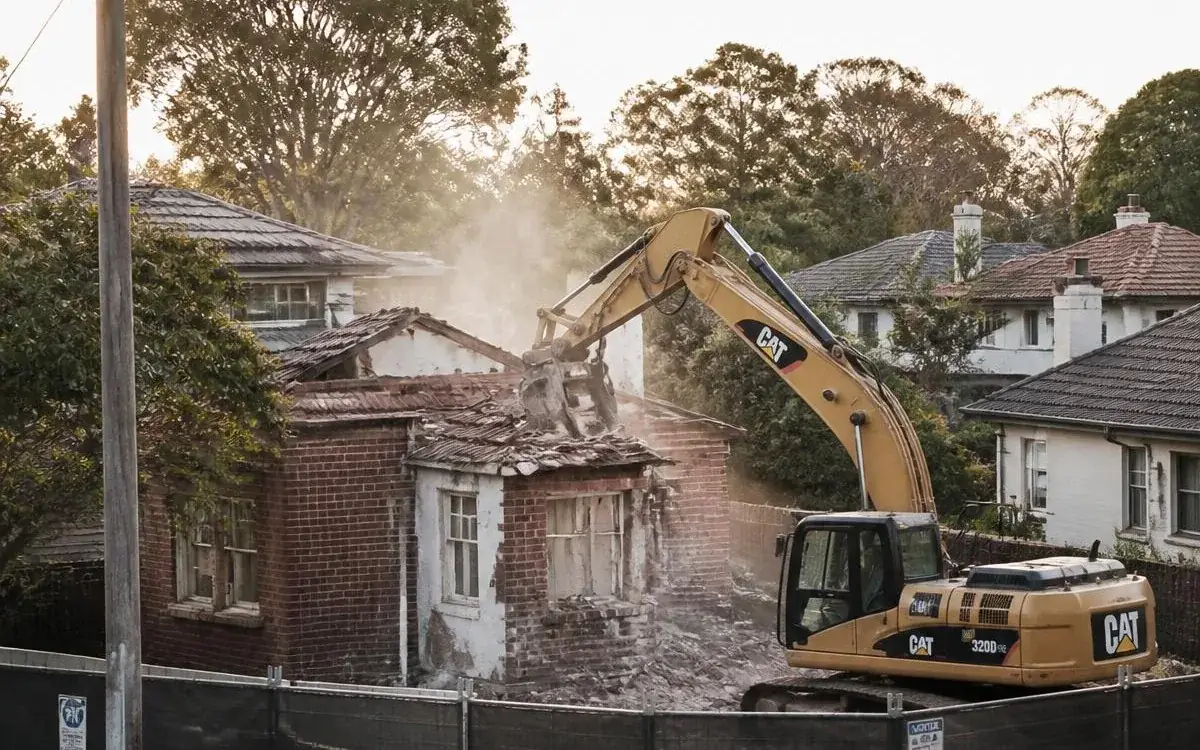
For a standard single-storey brick veneer or weatherboard house, demolition typically costs $20,000 to $45,000 in Canberra. Two-storey or double-brick homes, tight access, and blocks with lots of concrete, sheds or a pool can push that to $50,000 to $70,000 or more.
The price usually covers temporary fencing, knocking down the house and outbuildings, breaking up slabs and footings, and carting everything away. Check whether it also includes removing trees, old driveways, underground tanks and the pool, because these are often priced separately.
In the ACT, knocking down a standalone house usually doesn't need a development application if it meets the exemption rules, but it does need building approval through a certifier, and your neighbours need to be told in writing before work starts. Heritage-listed homes are a different story and normally need a development application.
2. Asbestos audit and removal
Any home built in the ACT before 1990 may contain asbestos (ACT Government), and a lot of Canberra's established suburbs were built well before then. The usual places are eaves, wall sheeting in wet areas, vinyl floor tiles, old fences and sheds.
Before demolition, a licensed asbestos assessor inspects the house and writes a report. That typically costs anywhere from a few hundred dollars to around $1,500, depending on the size of the house and how many samples get tested.
Removal is where the range gets wide. A house with asbestos only in the eaves and one bathroom might cost $3,500 to $8,000 to clear. A fibro home with asbestos right through it can run to $15,000 to $25,000 or more once you add licensed removal, air monitoring, clearance certificates and disposal.
One important exception: if a house is on the ACT's loose-fill asbestos register (the old Mr Fluffy homes), a separate set of rules applies. Get specialist advice before you plan anything on one of those blocks.
Our advice is simple. Get the asbestos audit done before you sign a demolition or building contract. It turns the biggest unknown at the start of the job into a number.
3. Disconnecting and reconnecting services
Before the house comes down, power, water, sewer, gas and phone lines all need to be safely disconnected. Then the new home has to be connected again. In Canberra that means dealing with Evoenergy for electricity and gas, Icon Water for water and sewer, and NBN Co for internet.
Budget around $10,000 to $25,000 for disconnections, temporary power and water during the build, and the new connections. It can be more if the sewer connection needs moving, the water meter needs upgrading or the power supply is going from overhead to underground.
Gas deserves its own mention. Since 8 December 2023, the ACT has stopped most new gas network connections, and that includes knockdown rebuilds where the old gas connection is abolished to make the site safe (ACT Government fact sheet). In practice, your new home will be all-electric, so plan for a heat pump hot water system, an induction cooktop and reverse-cycle heating from day one.
4. Design and approvals
The new home has to be designed, engineered and approved. The usual list is a site survey, soil test, architect or building designer fees, structural engineering, an energy rating assessment, building certifier fees and, if your design falls outside the exemption rules, a development application.
Leaving architect fees aside, because they vary a lot with the level of service, budget roughly $10,000 to $30,000 for surveys, reports, engineering, certification and approval fees.
Allow time as well as money. Design and approvals usually take 3 to 6 months before anything happens on site.
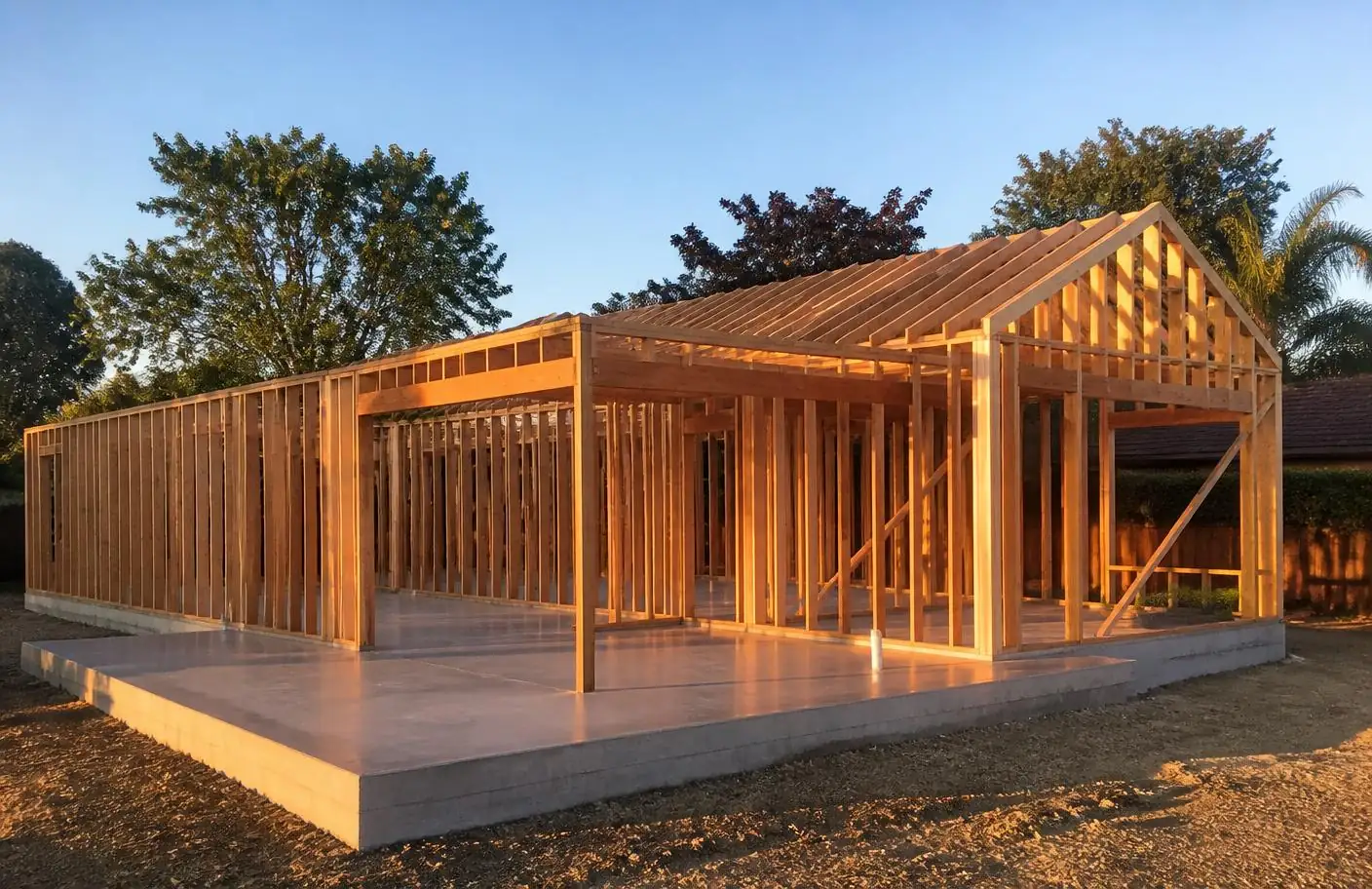
5. Building the new home
The build is the biggest number by a long way. In Canberra in 2026, a custom home typically costs $3,200 to $5,500 per square metre, and more for complex architectural designs or difficult sites. We break those ranges down by scope in our guide to how much a custom home costs in Canberra.
A few extra build costs come up on rebuilds. Established suburbs often have big street trees, power lines and neighbours close to the boundary, which make access slower. And a house that stood happily for 60 years on old footings tells you very little about what a new slab needs, so the soil test still matters.
The costs people forget
Rent while you build. Most families move out for 11 to 15 months. At $700 a week, 13 months of rent comes to roughly $39,000.
Moving twice, plus storage. Removalists out, a year of storage, then removalists back in.
Tree protection. Removing or heavily pruning a regulated tree in the ACT generally needs approval, and trees you keep need a fenced protection zone during demolition. You'll often need an arborist's report.
Landscaping, driveway and fencing. Demolition leaves you with bare dirt, and these finishing jobs often sit outside the building contract.
Holding costs. Rates and loan interest keep running while there's no house on the block.
Three example scenarios
Every block is different, so treat these as worked examples rather than quotes. They're based on the kinds of rebuilds that come up most often in Canberra.
Scenario 1: 1960s brick veneer on a flat block
A three-bedroom brick veneer house in an established suburb, with asbestos in the eaves and bathroom. The owners replace it with a 220 m² single-storey home with good-quality finishes.
Demolition: $25,000 to $35,000
Asbestos audit and removal: $5,000 to $10,000
Services and connections: $10,000 to $18,000
Design, reports and approvals: $15,000 to $30,000
Build, 220 m² at $3,200 to $4,000 per square metre: $704,000 to $880,000
Total: roughly $760,000 to $975,000, plus rent, landscaping and a contingency.
Scenario 2: fibro cottage on a sloping block
An older fibro home with asbestos through the walls, on a block that falls towards the back. The new 280 m² two-storey home is architect-designed with premium finishes, and the slope means retaining walls and extra excavation.
Demolition: $25,000 to $40,000
Asbestos audit and removal: $15,000 to $25,000
Services and connections: $12,000 to $25,000
Documentation, reports and approvals, not counting architect fees: $20,000 to $35,000
Extra site works and retaining: $40,000 to $90,000
Build, 280 m² at $4,000 to $5,500 per square metre: $1,120,000 to $1,540,000
Total: roughly $1.23 million to $1.76 million, plus architect fees, rent and landscaping.
Scenario 3: keeping a big tree and the pool
A family wants a new 260 m² home but wants to keep a mature tree out the front and the in-ground pool out the back. The demolition crew works around a fenced tree protection zone, uses smaller machines near the roots and protects the pool shell while the house comes down.
Demolition takes longer and costs more than it would on a clear site, and you'll pay for an arborist's report and protection fencing on top. The new home is priced the same way as any other build. It's usually money well spent, because a mature tree takes decades to replace and a pool is expensive to put back in.
Examples from our projects
A few of our recent rebuilds show how these costs play out on real sites:
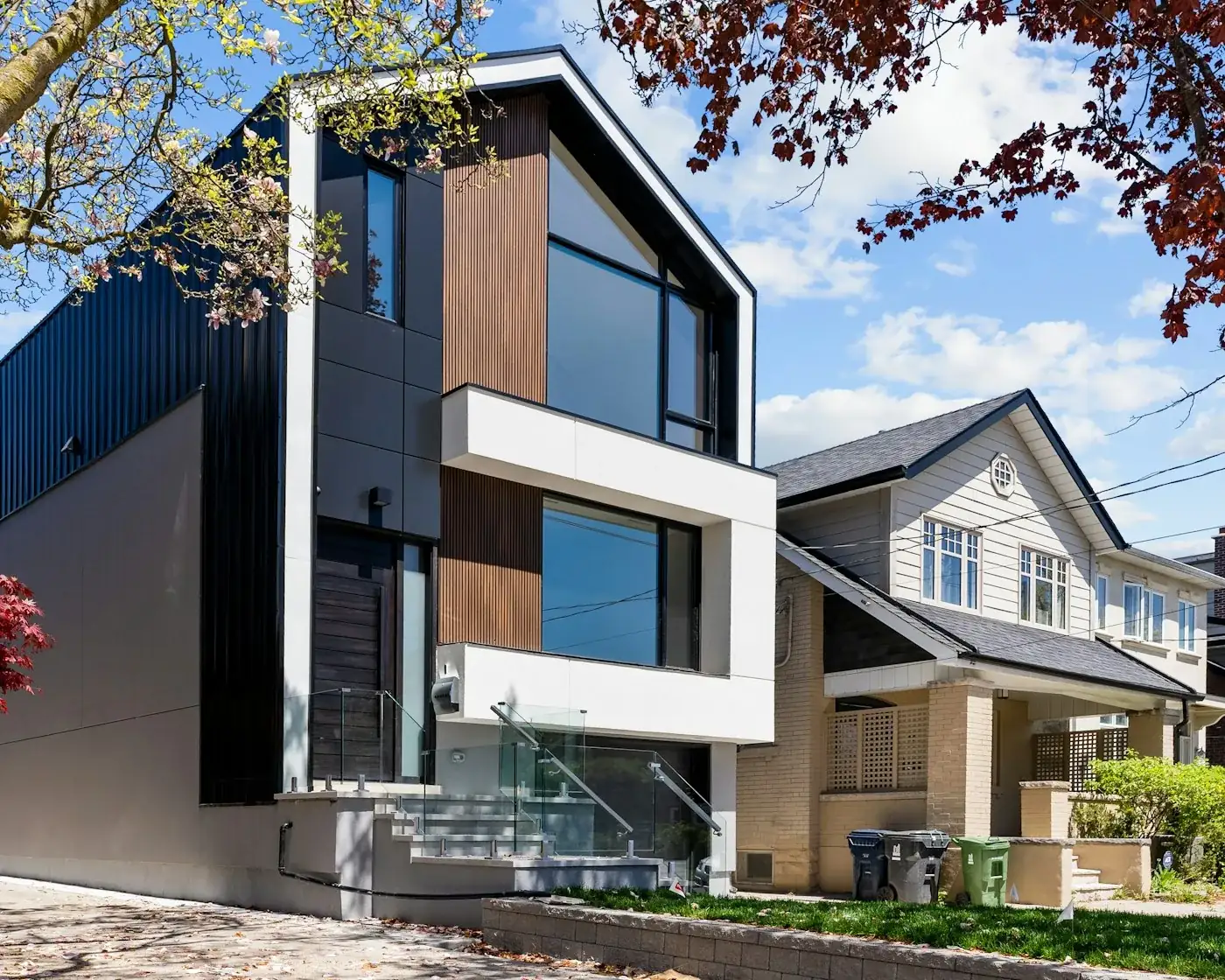
Purcell Residence II. The old fibro cottage came down in a week. The new 256 m² home went up on the original footprint with a 7-star thermal shell, keeping the setback and roof pitch the street was used to.
Onkaparinga Residences. A full knockdown rebuild where the new house was set out to protect the root zone of the family's jacaranda, the same kind of tree protection described in scenario 3.
Summerland Residences. Demolition and early works were staged so the family renting next door kept their driveway access the whole time. Planning like that takes effort, and it belongs in the price from day one.
What affects the cost most
The size and finish of the new home. It's usually around 90 per cent of the total, so it's where your decisions matter most.
The age and construction of the old house. Older homes tend to mean more asbestos. Double brick and big slabs take longer to pull out.
Slope, soil and rock. Extra site work on a sloping or rocky block can add tens of thousands.
Access. Narrow driveways, power lines, steep verges and close neighbours slow everything down.
Trees and things you want to keep. A tree, a pool or a boundary wall all cost time and protection.
Services. Moving a sewer line, upgrading the water meter or putting power underground all add cost.
Approvals. A design that needs a development application adds fees and months.
How to avoid nasty surprises
Start with a feasibility check. Before you pay for full drawings, have a builder look at the block, the existing house and your brief together.
Get the asbestos audit and soil test early. They're cheap and they remove the two biggest unknowns.
Put demolition inside the fixed price. When demolition, asbestos removal and site clearing sit in your building contract as one fixed line item, one party is responsible and nothing falls between contractors. It's how we run every knockdown rebuild in Canberra.
Check what's excluded. Tree removal, pool removal, the driveway, landscaping, fencing and connection fees are the usual gaps.
Keep a contingency. Hold 5 to 10 per cent aside, and more if the house is old or the block is steep.
Book a free site consult
The quickest way to get a real number is to have someone walk your block. We'll look at the house, the site, access and services, talk through what you'd like to build, and tell you honestly whether a rebuild makes sense for your budget.
Book a free site consult and we'll be in touch to find a time that suits you.
Questions
Frequently asked questions
How much does it cost to demolish a house in Canberra?
Typically $20,000 to $45,000 for a single-storey house, and more for two-storey or double-brick homes, tight sites, or blocks with a pool and lots of concrete. Asbestos removal is usually extra.
Do I need an asbestos audit before demolition?
In practice, yes. Any ACT home built before 1990 may contain asbestos, and it has to be identified and removed by licensed professionals before the house comes down. An audit typically costs a few hundred dollars to about $1,500.
Is a knockdown rebuild cheaper than buying another house?
Often, yes. You avoid the costs of buying again, like stamp duty, agent fees and moving twice, and you stay somewhere you already know. Whether it works out cheaper for you depends on your block and what you'd buy instead, so it's worth comparing both properly.
Is it cheaper to renovate than to knock down and rebuild?
For smaller changes, usually. But once a renovation touches most of the house, needs structural work or brings old asbestos and wiring into play, the cost per square metre can match or beat a new build, and you still end up with an old house underneath. A builder can price both options side by side.
How long does a knockdown rebuild take in Canberra?
Allow 3 to 6 months for design and approvals, then roughly 11 to 15 months from demolition to handover, depending on the size and complexity of the new home.
Do I need a development application for a knockdown rebuild?
Not always. Demolishing a standalone house is often exempt from a development application, and a new home that meets the exemption rules may only need building approval. Heritage-listed homes, and designs that fall outside the rules, will need one.
Is demolition included in your fixed price?
Yes. On our rebuilds, the asbestos audit and removal, disconnection of services, demolition and site clearing are priced as one fixed line item in the building contract, and we manage the approvals for you.
Can I keep my gas connection?
Usually not. If the gas connection is abolished to make the site safe for demolition, ACT rules mean the new home will need to be all-electric.