Multi Residential7 min read
Can my block take a duplex? Dual occupancy rules in the ACT
Can your block take a duplex? Canberra's dual occupancy rules after the 2026 missing middle reforms, plus lease variation charges, stamp duty and costs.
In this article
- The short answer
- What changed on 1 July 2026
- The old rule: 800 m² blocks and a 120 m² second home
- The new rules: the missing middle reforms
- What decides whether your block can take a duplex
- Approvals and the lease variation charge
- Development approval
- The lease variation charge
- What about stamp duty?
- How much does a duplex cost to build in Canberra?
- Start with a yield study
- A dual occupancy we've built
- Find out what your block can take
- Frequently asked questions
Rules checked in October 2026. Planning rules change, so check the date before you rely on this.
If you own a decent-sized block in an established Canberra suburb, you've probably wondered whether it could take a second home. Maybe it's for ageing parents or grown-up kids. Maybe it's to build two, live in one and sell the other. Either way, the first question is the same: what do the dual occupancy rules in Canberra actually allow?
The answer changed this year. We design and build duplexes and townhouses as multi residential builders Canberra wide, so we get asked this a lot. Here's our plain-English guide to where the rules stand now, what a duplex really costs, and how to find out what your block can hold before you spend money on drawings.
The short answer
Since 1 July 2026, most residential blocks in Canberra's RZ1 and RZ2 zones can be considered for a duplex or dual occupancy. The old 800 m² minimum block size for a second home in RZ1 has gone. What your block can take now depends on its size, frontage, slope, trees, site coverage and how well the design meets the ACT's Missing Middle Housing Design Guide. You'll need a development application, and usually a lease variation.
What changed on 1 July 2026
For most of Canberra's history, the suburbs zoned RZ1 were set aside for one house per block. That started to change in late 2023, and changed again this year.
The old rule: 800 m² blocks and a 120 m² second home
Under the Territory Plan that started in November 2023, an RZ1 block of 800 m² or more could take a second dwelling of up to 120 m² in floor area, and that second home could be unit titled and sold separately. It opened the door, but a lot of blocks fell just short of 800 m², and a 120 m² cap limited what the second home could be.
The new rules: the missing middle reforms
On 1 July 2026, Major Plan Amendment 04 to the Territory Plan took effect, bringing in the ACT Government's missing middle housing reforms. In short:
Duplexes, triplexes, townhouses and terraces can now be built in RZ1 and RZ2, which covers most of Canberra's residential land.
Height limits stay low. RZ1 is limited to two storeys plus an attic. RZ2 allows up to three storeys plus an attic.
There's no fixed minimum block size for a dual occupancy. Instead, the Missing Middle Housing Design Guide uses block size as a guide, suggesting around 600 m² or more for two dwellings and around 700 m² or more for three. A smaller block isn't automatically ruled out, but it has to prove the design works.
Site coverage for multi-unit housing stays at 45 per cent in RZ1 and RZ2, and rules for private open space, minimum dwelling sizes, cross ventilation and tree planting still apply.
Subdivision and block consolidation are now possible in both zones, subject to the rules.
These reforms are new, and some of the detail is still being refined. Treat this as a guide, and get advice on your specific block before you commit.
What decides whether your block can take a duplex
Block size is only the start. These are the things that most often decide whether a second home fits, and how good it can be:
Frontage and shape. Two homes usually need two driveways or a shared one, plus room for bins, letterboxes and services. A narrow or battle-axe block can make that hard.
Site coverage and open space. With 45 per cent coverage and minimum private open space for each home, the footprint fills up fast. Two storeys often solve it.
Trees. Regulated trees and their root zones can take a big bite out of a block, and they're protected under ACT law.
Slope. A sloping block can work beautifully for stepped homes, but it adds retaining and excavation costs.
Neighbours. Overshadowing, overlooking and solar access to the neighbouring block are all assessed.
Services. Sewer and water connections, power capacity and stormwater all have to work for two homes, not one.
Heritage and overlays. Heritage precincts and some overlays carry their own rules.
Approvals and the lease variation charge
Development approval
A dual occupancy needs a development application, assessed against the Territory Plan, the residential zone rules and the Missing Middle Housing Design Guide. Because Canberra land is leasehold, you'll usually also need to vary your Crown lease to allow more than one dwelling, and that variation is part of the approval process.
The lease variation charge
When a lease is varied to allow extra dwellings, the ACT charges a lease variation charge, often called the LVC. For most residential blocks it's a codified amount set by suburb, so you can look it up rather than pay for a valuation.
The amount varies a lot. Published 2026-27 figures for adding a second dwelling range from about $52,500 in Greenway to about $346,000 in Forrest. Where a lease is varied to specify the number of dwellings, the charge is $49,000 per dwelling.
The good news is that eligible missing middle projects can get a 50 per cent reduction in the LVC. To qualify, the block must be in RZ1 or RZ2, the project must add one or more dwellings, the charge must be deferred on or after 10 June 2026, development approval must be granted before 30 June 2029, and all dwellings must be finished by 31 December 2030. The reduction is applied through the LVC deferred payment scheme.
The older RZ1 partial waiver, which applied from November 2023, closed to new applicants on 30 June 2026.
What about stamp duty?
Stamp duty matters if you plan to sell the second home, because it affects what buyers will pay.
For contracts exchanged from 1 July 2026, the ACT Revenue Office says eligible owner-occupiers buying an off-the-plan unit-titled home, which includes townhouses and unit-titled dual occupancies, pay no stamp duty, and the previous value cap has been removed. Buyers have to meet the eligibility rules, including living in the home, so check the details for your buyers before you count on it.
How much does a duplex cost to build in Canberra?
Every block is different, but here's how the budget usually breaks down for a dual occupancy in 2026:
The build. Typically $3,200 to $4,500 per square metre for good-quality finishes. Two 180 m² homes come to roughly $1.15 million to $1.6 million. You save on site set-up and some shared work, but you're still building two kitchens, two sets of bathrooms and two sets of services.
Party walls. An acoustically separated wall between the homes costs more than a standard wall, and it's worth every dollar.
Separate services. Separate meters, water, sewer and power for each home, typically $20,000 to $50,000 depending on what the street can supply.
Design, reports and approvals. Survey, soil test, design, engineering, energy assessments, the development application and certification. Budget roughly $30,000 to $70,000 before architect fees.
Lease variation charge. From around $26,000 to well over $100,000 after the 50 per cent reduction, depending on the suburb.
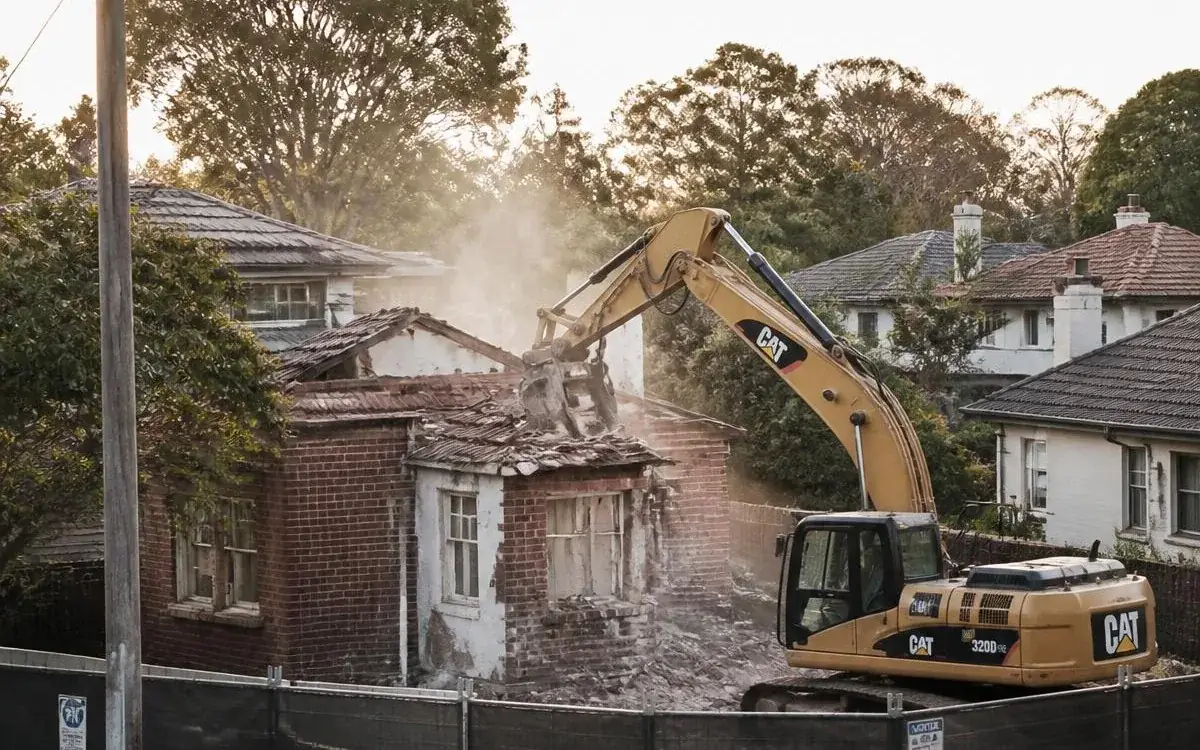
Demolition, if there's an existing house to clear. Our guide to knockdown rebuild costs covers that stage in detail.
Unit titling, if you plan to sell one home. Surveyors and legal fees for the units plan and the owners corporation.
Keep a contingency of 5 to 10 per cent, and more on an older or sloping block.
Start with a yield study
Before you pay for full drawings, find out what your block can actually hold. A yield study looks at your block's size, shape, slope, trees, services and lease, tests the options against the rules, and gives you a rough cost per dwelling. It answers the big questions early: two homes or three, single or double storey, one title or two, and whether the numbers stack up.
At Deol Built, our yield study takes about two weeks and covers the LVC and titling options for your block, so you know what you're working with before you commit to design.
A dual occupancy we've built
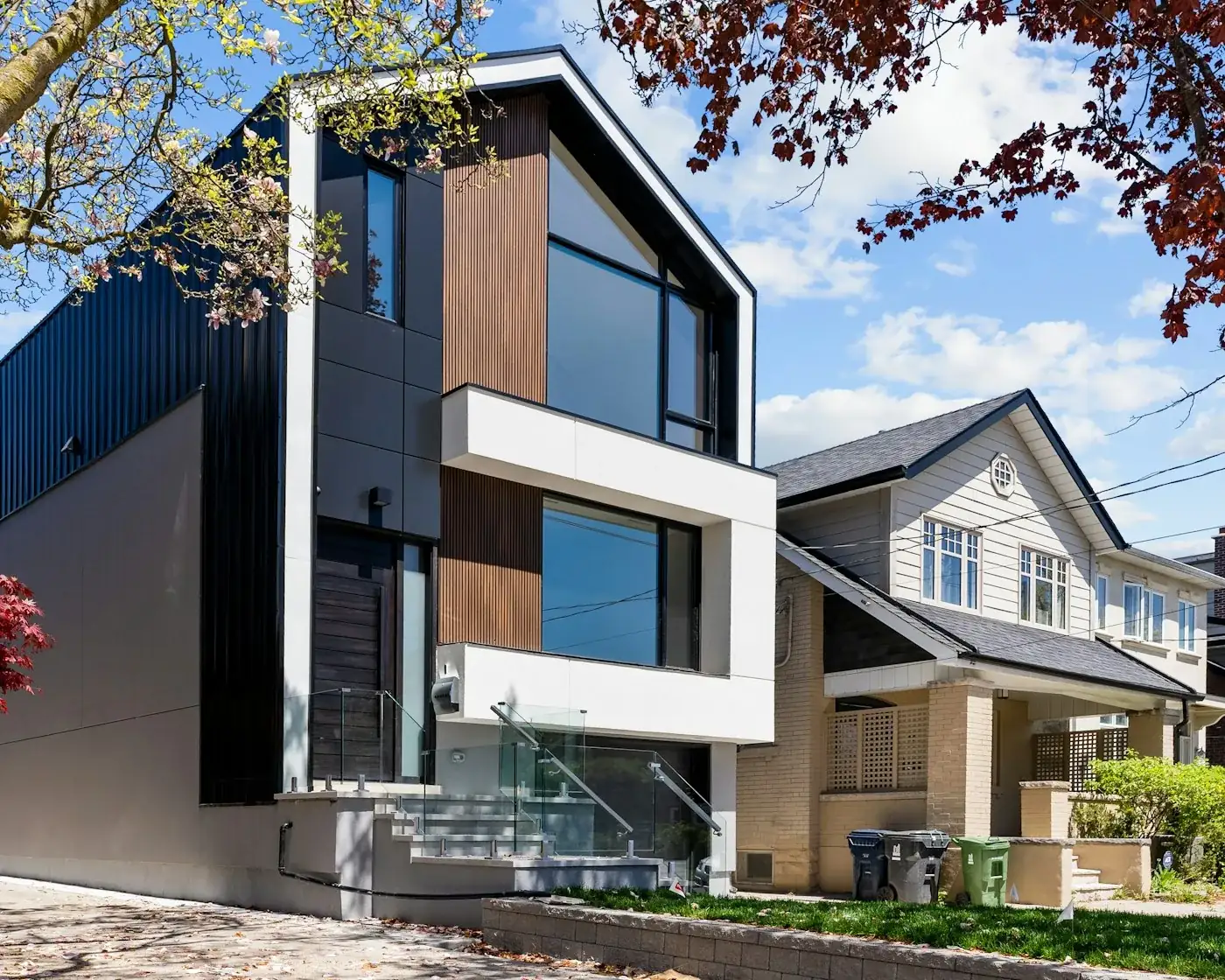
On a 960 m² block in Kaleen, we built Onkaparinga Residences: two four-bedroom family homes of 214 m² each. The owner's biggest worry was that one home would end up being the "back unit", so both have their own front door, their own driveway and a private garden. The party wall is acoustically separated, and each home has its own meters, hot water and services, so neither household is affected by the other.
For something bigger, Denman Triplex shows how three homes can be stepped down a sloping block, each with its own entry, garden and view.
Find out what your block can take
The new rules have opened up a lot of Canberra blocks, but every one is different. We'll look at your block, talk through what you'd like to build and tell you honestly whether a duplex makes sense for your budget.
Book a yield study for your block and tell us a little about your address and plans.
Questions
Frequently asked questions
Can I build a duplex on my block in Canberra?
Possibly. Since the missing middle reforms took effect on 1 July 2026, duplexes and dual occupancies can be considered on most RZ1 and RZ2 blocks in Canberra. Whether yours can take one depends on its size, frontage, slope, trees, site coverage and services, and on the design meeting the Missing Middle Housing Design Guide. A yield study is the quickest way to find out.
What is the minimum block size for a dual occupancy in the ACT?
There is no longer a fixed minimum. The old rule required an RZ1 block of 800 m² or more for a second dwelling of up to 120 m². Since 1 July 2026, the Missing Middle Housing Design Guide uses block size as a guide instead, suggesting around 600 m² or more for two dwellings and around 700 m² or more for three. Smaller blocks aren't automatically excluded, but the design has to show it works.
Do I need a development application for a dual occupancy in Canberra?
Yes. A dual occupancy needs a development application, assessed against the Territory Plan, the residential zone rules and the Missing Middle Housing Design Guide. Most projects also need the Crown lease varied to allow more than one dwelling.
How much is the lease variation charge for a dual occupancy?
It depends on the suburb and how the lease is varied. Published 2026-27 figures for adding a second dwelling range from about $52,500 in Greenway to about $346,000 in Forrest, and specifying the number of dwellings on a lease costs $49,000 per dwelling. Eligible missing middle projects in RZ1 and RZ2 can get a 50 per cent reduction if development approval is granted before 30 June 2029 and the homes are finished by 31 December 2030.
Can I sell the second dwelling separately?
Often, yes. If the block can be unit titled, each home gets its own title and can be sold separately, or you can keep both. Whether titling is possible depends on your block and lease, so it should be checked in the yield study before design starts.
Is stamp duty payable on a new dual occupancy home in the ACT?
For contracts exchanged from 1 July 2026, eligible owner-occupiers buying an off-the-plan unit-titled home, including a unit-titled dual occupancy or townhouse, pay no stamp duty under the ACT's off-the-plan unit duty exemption, and the previous value cap has been removed. Buyers must meet the eligibility rules, so check with the ACT Revenue Office.
How much does it cost to build a duplex in Canberra?
As a guide, two 180 m² homes with good-quality finishes typically cost about $1.15 million to $1.6 million to build in 2026. On top of that, allow for separate services, design and approvals, the lease variation charge, demolition if there's an existing house, unit titling if you plan to sell, and a 5 to 10 per cent contingency.