Building Advice15 min read
Everything You Need to Know About Canberra Building Approvals
How Canberra building approvals work: DA vs building approval, when you need one, documents, ACT fees and levies, timeframes and retrospective approval.

In this article
- What are building approvals and why do they matter?
- Understanding the ACT building approval process
- Development approval vs building approval: what's the difference?
- When do you need building approval in Canberra?
- Documents required for building approval
- How much do building approvals cost in Canberra?
- How long does building approval take in the ACT?
- Building approval requirements for different construction projects
- Custom homes
- Knockdown rebuilds
- Duplexes and multi-residential developments
- What happens if you build without approval?
- Understanding retrospective building approvals in Canberra
- Common building approval mistakes to avoid
- Frequently asked questions
Rules, fees and levies checked in November 2026. They change, so check the date before you rely on them.
Before any building work starts in Canberra, someone has to approve it. For most projects, that means a building approval, and sometimes a development approval as well. The two are often confused, the rules have changed in the last few years, and the costs aren't always obvious.
This guide explains how Canberra building approvals work under ACT law: what they are, when you need one, what documents you'll need, what they cost, how long they take, and what happens if work goes ahead without one.
What are building approvals and why do they matter?
A building approval is the ACT's approval of the plans for building work. It's issued under the Building Act 2004 by a certifier, a licensed building surveyor you appoint, once they're satisfied the design meets the National Construction Code and ACT building law. In other states this is often called a building permit; in Canberra, it's a building approval.
Under the Building Act 2004, building work that needs approval must be carried out in line with the approved plans, and if there are no approved plans, it must not be carried out at all.
A building approval matters for more than legal compliance:
It starts the inspection process. Your certifier inspects the work at set stages, from the footings to completion.
It leads to a certificate of occupancy. A new home can't lawfully be lived in until that certificate is issued.
It protects your investment. Approved, inspected work is easier to insure, and it's what buyers expect to see when you sell.
It records the building. Approved plans are kept on the property's building file, which future owners and their inspectors will check.
Understanding the ACT building approval process
The ACT building approval process follows the same steps for most residential projects:
Check the planning pathway. Work out whether your project needs a development approval or is exempt development. This decides what has to happen before building approval.
Prepare the drawings and documents. Design drawings, engineering, an energy efficiency assessment, surveys and any reports your project needs.
Appoint a certifier. The land owner appoints a licensed building surveyor in writing. Your builder or designer can usually recommend one.
Tell the neighbours, if required. For an exempt single house or a house demolition, the adjoining residents must be given the site plans and elevations before you apply.
Lodge the building approval application. The owner, or an agent on their behalf, applies to the certifier with the plans and supporting documents.
Assessment and referrals. The certifier checks the design against the building code. Some applications are also referred to utilities or the Emergency Services Commissioner for advice.
Pay the levies. The ACT building levy is charged on the approval, and the training levy must be paid before the approval can be issued.
Building approval is issued. You receive the approved, stamped plans.
Commencement notice. Your licensed builder applies to the certifier for a commencement notice, with residential building work insurance in place. Only then can work start.
Inspections and completion. The certifier inspects the work at set stages, issues a certificate of completion, and a certificate of occupancy follows.
For how approvals fit into the whole project, from budget to handover, see our guide to building a house in Canberra step by step.
Development approval vs building approval: what's the difference?
Development approval and building approval answer different questions, under different laws, from different decision-makers. A development approval decides whether a project can happen on the land. A building approval decides whether the building itself is designed to comply.
| Development approval (DA) | Building approval (BA) | |
|---|---|---|
| What it decides | Whether the development is allowed: use, siting, height, setbacks, design, trees and effects on neighbours | Whether the building design meets the building code: structure, fire safety, waterproofing, energy efficiency and more |
| Law | Planning Act 2023 and the Territory Plan | Building Act 2004 and the National Construction Code |
| Who decides | The Territory Planning Authority | A licensed building surveyor appointed by the owner |
| When it's needed | When the development isn't exempt, such as a duplex or a house outside the single dwelling rules | For most building work, including new homes, extensions and demolition |
| Decision time | 30 working days, or 45 if neighbours make representations, plus any time waiting on further information | No fixed statutory period. It depends on how complete the application is. |
| Main costs | A DA fee based on the cost of the work | Certifier fees, the building levy and the training levy |
When a project needs both, the DA comes first, and a copy goes in with the building approval application. The building approval then has to match the development approval.
The most common mix-up is assuming that "exempt" means no approval at all. A single house that meets the ACT's Single Dwelling Housing Development Control can be exempt from needing a DA, but it still needs a building approval. ACT Planning explains how to check if you need a DA.
When do you need building approval in Canberra?
You'll need building approval for most building work in Canberra, including:
New houses, duplexes, townhouses and apartments
Extensions, second storeys and other additions
Structural alterations, such as removing a load-bearing wall
Demolishing a house
Most garages, carports, decks, pergolas and outbuildings that are larger than the exemption limits
Most in-ground swimming pools
Some minor work is exempt from building approval, provided it meets the conditions in the Building (General) Regulation 2008. Examples include fences and walls up to 1.8 m high (but not pool fences), low retaining walls, small sheds and pergolas within size and setback limits, rooftop solar panels and solar hot water systems, air-conditioning units, water tanks, and some internal and external alterations.
The conditions matter. An exemption can depend on the size, height and position of the work and on whether it sits over an easement, and the exemptions don't apply at all to homes on the ACT's loose-fill asbestos register. Work that's exempt from building approval may still need a DA, must still comply with your lease, and its electrical and plumbing work must still be done by licensed tradespeople.
If you're not sure, a building surveyor can carry out an exemption assessment and give you a written notice saying which parts of the work are exempt and which aren't.
Home renovations. Cosmetic updates, like painting, new flooring or new cabinetry in the same layout, don't usually need building approval. Extensions, structural changes, enclosing a verandah or adding a bathroom usually do. If your home was built before 1985, a renovation that needs approval must also include an asbestos removal control plan with the application.
It isn't only homes. Offices, shops, clinics and many fit-outs need building approval too, under the same Building Act process. If that's your project, see our approach to commercial construction in Canberra.
Documents required for building approval
A complete application is the single biggest thing you can do to speed up approval. Here's the building approval documentation a Canberra certifier will typically need for residential work.
| Document | When it's needed |
|---|---|
| Building approval application and certifier appointment | Always, signed by the owner or their agent |
| Architectural drawings: site plan, floor plans, elevations and sections | Always |
| Survey of the block, showing boundaries, levels and easements | New buildings and most additions |
| Structural engineering and soil report | New buildings, additions and structural changes |
| Energy efficiency certificate | Where required by the energy efficiency rules, including new homes, which must meet the 7-star standard |
| Copy of the development approval | If the project needed a DA |
| Written notice that neighbours were given the plans | Exempt single houses and house demolitions, given within 2 years before you apply |
| Waste management plan | Any demolition |
| Asbestos removal control plan | Work on a house built before 1985 |
| Asbestos assessment report | If one exists for the property |
| Tree management plan | If the work may affect a protected tree, including one on a neighbour's block |
| Estimate of the cost of the work | Always, as the levies are calculated from it |
Your certifier may ask for more, depending on the project. Before work starts, your builder will also need residential building work insurance for the commencement notice, but that isn't part of the building approval itself.
How much do building approvals cost in Canberra?
Building approval fees in Canberra come from several places. Some are set by the ACT Government and calculated as a percentage of the cost of the work, and some are set by the professionals you engage.
| Cost | How it's worked out | Example on $800,000 of work |
|---|---|---|
| ACT building levy | 1.40% of the total cost of works for homes and apartments (1.28% for other building work) | $11,200 |
| Training levy | 0.2% of the value of the work, for work over $10,000. Paid before the approval is issued. | $1,600 |
| Certifier fees | Set by the certifier, usually covering assessment and stage inspections | Quoted per project |
| DA fee, if a DA is needed | A sliding scale by cost of work. For work costing $500,001 to $1,000,000: $2,921.80 plus 0.438% of the amount over $500,000. | $4,235.80 |
| Consultants | Designer or architect, engineer, energy assessor, surveyor and soil test | Quoted per project |
The levy rates are set in the ACT's Building (Fees) Determination 2026, which applies from 1 July 2026. The cost of works used for the levies is calculated under the ACT's cost of building work rules, so it may not match your contract price exactly. Treat the example as a guide to scale, not a quote.
Some projects carry other costs. A duplex usually needs a lease variation, which can mean a lease variation charge. Protected trees mean an arborist's report and tree management plan. And if you make changes after approval, the certifier will charge to assess the amended plans.
The levies are the costs people most often leave out of their budgets. On a typical new home, the building levy and training levy alone add up to more than 1.5 per cent of the cost of the work, so include them from the start.
How long does building approval take in the ACT?
How long building approval takes in the ACT depends mostly on two things: whether you need a DA, and how complete your application is.
| Stage | Time |
|---|---|
| Design and documentation | Usually the longest part: weeks to months, depending on the project |
| Development approval, if needed | Up to 30 working days, or 45 if representations are made. The clock stops while the authority waits for any further information it has asked for. |
| Referrals to utilities or emergency services | The entity has 15 working days to give its advice. If it doesn't respond in time, it's taken to support the application. |
| Certifier assessment | No fixed statutory period. A complete application for a house commonly takes a few weeks; missing information adds time. |
| After approval | A building approval generally lasts up to 3 years, or less if your lease or another law requires the work to be finished sooner. |
For an exempt single house with complete documents, building approval is often one of the quicker steps in the project. For a duplex, the DA is usually what sets the pace, so it's worth getting the design right before you lodge.
Building approval requirements for different construction projects
The building approval requirements in the ACT change with the type of project. Here's how they apply to the three most common residential projects in Canberra.
Custom homes
A new single house that meets the Single Dwelling Housing Development Control is usually exempt development, so it doesn't need a DA. You still need to give the neighbours the site plans and elevations before applying, and you still need building approval. Where a design misses the rules only slightly, the planning authority can sometimes allow it to stay exempt through an exemption declaration. Larger departures need a DA.
Example: A family is building a new two-storey home on a vacant block in a newer suburb. The design fits the single dwelling rules, so there's no DA. The neighbours are given the plans, the certifier assesses the drawings, engineering and 7-star energy certificate, and once the building approval is issued, the builder applies for the commencement notice. Approval is a few weeks of paperwork rather than months.
Where the living areas sit, how big the windows are and how close the house comes to each boundary are exactly the things the single dwelling rules look at. At Wacando Residence in Jacka, for example, the bedrooms face the street and the living rooms take the full width of the rear, opening onto the garden.
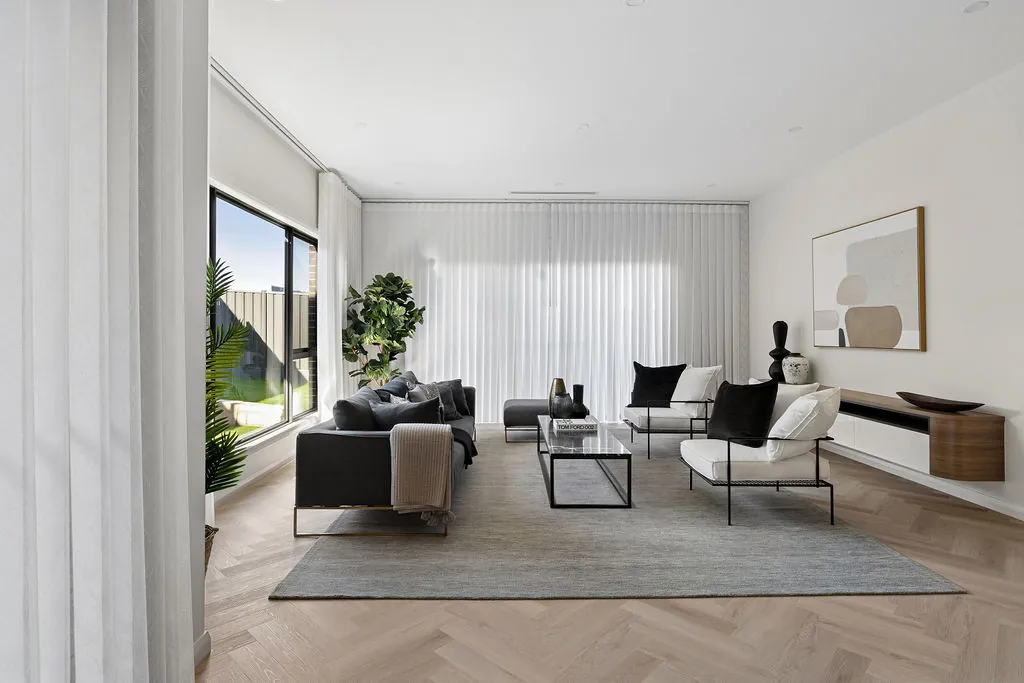
Architect-designed homes are more likely to test the rules on height, setbacks or solar access, so check the planning pathway early. We design and build custom homes in Canberra and look at this before the design is finalised.
Knockdown rebuilds
A knockdown rebuild is two pieces of building work, and both need building approval: demolishing the old house, and building the new one. They can be approved together or separately.
Demolishing a single house is usually exempt from needing a DA, but the neighbours must be given information about it first. The demolition approval also needs:
A waste management plan
An asbestos removal control plan if the house was built before 1985, and the asbestos assessment report if there is one
Advice from the water, electricity and gas utilities, which the certifier asks for, so services are safely disconnected
Homes on the ACT's loose-fill asbestos register follow separate rules and don't get the usual exemptions.
Example: An owner in an established suburb plans to replace a 1960s brick veneer house. The asbestos assessment finds asbestos in the eaves and bathroom, so an asbestos removal control plan goes in with the application, along with a waste management plan. The utilities give their advice on disconnection, and the demolition is approved. The new home, designed within the single dwelling rules, follows as an exempt house with its own building approval.
Coordinating both approvals is a big part of the job for knockdown rebuild builders in Canberra, because the demolition can't start until it's approved, and the new build can't start until its own approval and commencement notice are in place.
Duplexes and multi-residential developments
Duplexes, townhouses and other multi-residential developments need a development approval before building approval. A dual occupancy isn't exempt development. Since the ACT's missing middle reforms took effect on 1 July 2026, duplexes and townhouses can be considered on most RZ1 and RZ2 blocks, but the design still has to meet the Missing Middle Housing Design Guide. Most projects also need the Crown lease varied to allow more than one dwelling.
Once the DA is approved, the building approval application includes a copy of it, and the certifier checks the design against the building code. Attached homes have extra requirements, including fire and sound separation between dwellings. Unit titling, if you want to sell the homes separately, is a separate process again.
Example: An owner of a 900 m² block in an RZ1 suburb wants to build two homes and sell one. A yield study confirms what the block can take, a DA is lodged with the planning authority, and the lease variation is dealt with as part of the approval. After the DA is granted, the building approval is lodged with the DA attached, and construction can begin once the commencement notice is issued.
Our guide to dual occupancy rules in the ACT covers the planning side in detail. For the build itself, talk to experienced multi-residential builders in Canberra before you commit to drawings.
What happens if you build without approval?
Building without the approval you need causes problems that tend to grow over time:
It's an offence. Building work that needs approval must not be carried out without approved plans, and builders who do it face penalties. Carrying out development that needed a DA without one is also an offence under the Planning Act.
Work can be stopped. The Construction Occupations Registrar, within Access Canberra, can issue a stop notice.
You can be ordered to fix or remove it. The registrar can direct the owner to carry out building work, including demolition, and to submit plans and get approval.
There's no certificate of occupancy. Unapproved work hasn't been inspected or certified, so it has no certificate of occupancy.
It shows up when you sell. ACT sellers must provide building and compliance reports, which compare what's on the block with what's on the building file. Unapproved structures are flagged, and buyers may ask for them to be approved, ask for a lower price or walk away.
It can complicate insurance. An insurer may question a claim involving work that was never approved or inspected.
The problem also passes to the next owner. If you buy a property with unapproved work, the obligation to fix it can become yours.
Understanding retrospective building approvals in Canberra
If work has already been done without approval, it can often be approved after the fact, but there's no shortcut. In Canberra, retrospective building approval isn't a separate certificate. A certifier assesses the work as it was built and, if it complies, issues a building approval for it. ACT law expressly contemplates this: if the registrar orders an owner to deal with work built without approval, that order is revoked if a certifier issues a building approval for the work within 2 weeks.
A typical retrospective building approval in Canberra involves:
Engaging a certifier to look at the work and explain what they'll need.
Preparing as-built drawings that show exactly what was built.
Getting an engineer's assessment of the structure. Walls or ceilings sometimes have to be opened up so footings, framing or waterproofing can be checked.
Fixing anything that doesn't comply, or removing it if it can't be made to comply.
Applying for development approval, if one was needed. Under the Planning Act 2023, the lessee can apply for development approval for development already carried out, and it's assessed as if it hadn't been built yet. That doesn't stop any action for the original offence.
Building approval, final inspection and certificate of occupancy once the certifier is satisfied.
Some older structures may not need approval at all. If a shed or pergola met the exemption rules when it was built, a building surveyor can certify that in an exemption assessment, including the dates the assessment is based on.
Retrospective approval almost always costs more than getting approval first, because of the extra investigation, drawings and rework. It's worth sorting out before you sell, rather than when a buyer's report finds it.
Common building approval mistakes to avoid
Assuming "exempt" means no approval. A house that's exempt from a DA still needs building approval.
Starting work too early. Demolition and building work can't begin until the building approval and commencement notice are in place.
Skipping the neighbour notice. For exempt houses and demolitions, the neighbours must get the plans within 2 years before you apply, and the application has to show it.
Lodging an incomplete application. Missing engineering, energy certificates or surveys lead to requests for more information and delays.
Changing the design after approval. Changes need amended plans approved by the certifier, and sometimes an amended DA, before that work is built.
Leaving the levies out of the budget. At 1.40% plus 0.2% of the cost of works, the levies are significant on a new home.
Ignoring protected trees. A tree management plan may be needed, even for a tree on the neighbour's side of the fence.
Letting the approval lapse. A building approval generally lasts up to 3 years, so plan the build to start well within that time.
Not reading the Crown lease. The lease's purpose clause and any estate rules can limit what you're allowed to build, whatever the approvals say.
Buying without checking the building file. Read the building and compliance reports for any unapproved structures before you exchange.
Every block and every project is a little different. If you'd like to work out which approvals your project needs, discuss your upcoming building project with our team.
Questions
Frequently asked questions
What is a building approval in Canberra?
A building approval is the ACT's approval of the plans for building work, issued under the Building Act 2004 by a licensed building surveyor (your certifier). It confirms the design meets the National Construction Code and ACT building law. Building work that needs approval must be carried out in line with the approved plans, and can't be carried out without them.
How do I get building approval in Canberra?
Appoint a licensed building surveyor as your certifier, prepare the drawings and supporting documents, and lodge a building approval application with the certifier. If your project needs a development approval, get that first. For an exempt single house or a house demolition, give the neighbours the site plans and elevations before you apply. The certifier assesses the application, the levies are paid, and the approval is issued.
What is the building approval process in the ACT?
Check whether you need a development approval, prepare the drawings and documents, appoint a certifier, give neighbours the plans if required, and lodge the application. The certifier assesses the design and refers it to utilities or emergency services where required. After the levies are paid and the approval is issued, your builder applies for a commencement notice, and the certifier inspects the work at set stages through to completion.
How much does building approval cost in Canberra?
For a new home, the ACT building levy is 1.40% of the total cost of works and the training levy is 0.2% of the value of the work over $10,000. On $800,000 of work, that's $11,200 plus $1,600. Add your certifier's fees, consultant fees for drawings, engineering and energy assessment, and a development application fee if your project needs a DA.
How long does it take to get building approval?
There's no fixed statutory period for a certifier to decide, but a complete application for a house commonly takes a few weeks. If a development approval is needed first, the planning authority has up to 30 working days to decide, or 45 if representations are made, plus any time waiting on further information. Referral agencies have 15 working days to give advice.
Who can issue building approvals in the ACT?
Building approvals are issued by certifiers: licensed building surveyors appointed by the land owner. The ACT Government doesn't issue building approvals for private projects, but its Construction Occupations Registrar, within Access Canberra, regulates certifiers and builders and keeps the building records.
What documents are required for building approval?
Typically architectural drawings, a survey, structural engineering and soil report, an energy efficiency certificate for new homes, an estimate of the cost of the work, and a copy of any development approval. Depending on the project you may also need proof the neighbours were given the plans, a waste management plan for demolition, an asbestos removal control plan for pre-1985 homes, and a tree management plan.
Is development approval the same as building approval?
No. A development approval, from the Territory Planning Authority, decides whether a project is allowed on the land, covering things like use, siting, height and setbacks. A building approval, from a licensed certifier, decides whether the building design meets the building code. Many single houses are exempt from needing a DA but still need building approval.
Do I need building approval for a home renovation?
It depends on the work. Cosmetic updates such as painting, new flooring or new cabinetry in the same layout don't usually need approval. Extensions, structural changes, enclosing a verandah and adding a bathroom usually do. If your home was built before 1985, an approved renovation also needs an asbestos removal control plan. A building surveyor can confirm what's exempt with an exemption assessment.
What happens if I build without approval in Canberra?
It's an offence, and the Construction Occupations Registrar can issue a stop notice or direct the owner to carry out building work, including demolition, and get approval. Unapproved work has no certificate of occupancy, is flagged in the building and compliance reports provided when you sell, and can complicate insurance. The obligation to fix it can pass to the next owner.
Can I get retrospective building approval in Canberra?
Often, yes. A certifier can assess work that's already been built and issue a building approval for it if it complies. Expect as-built drawings, an engineer's assessment and possibly opening up walls or ceilings, plus fixing anything that doesn't comply. If a development approval was also needed, the lessee can apply for one for development already carried out under the Planning Act 2023.
Do duplexes and townhouses require building approval?
Yes. Duplexes and townhouses need a development approval first, as they aren't exempt development, and usually a lease variation. Once the DA is granted, they need building approval, with a copy of the DA included in the application. The design must also meet building code requirements for attached homes, including fire and sound separation between dwellings.